


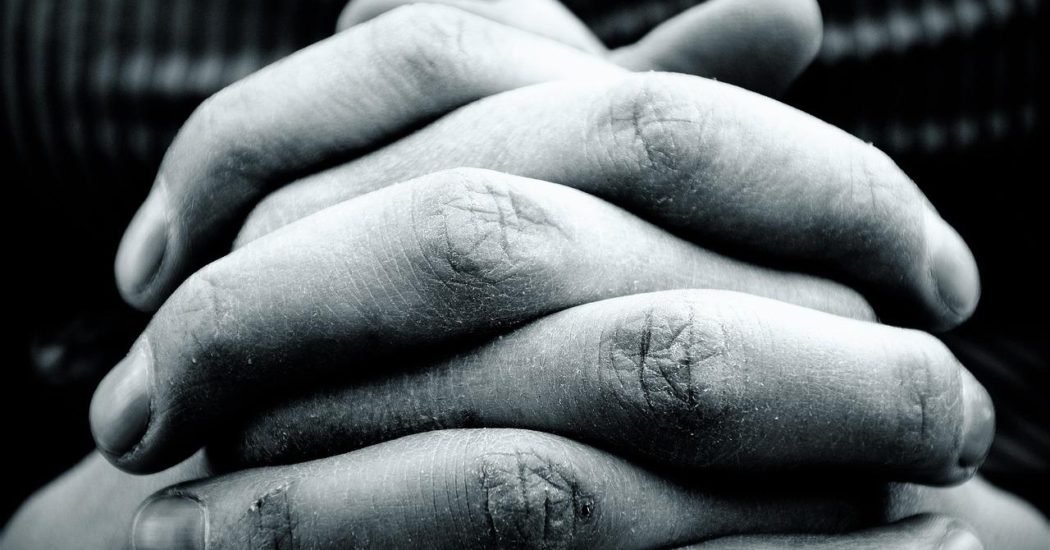

As far as I know the above lyrics from the Allison Krauss song were not written in response to Henri Nouwen’s book With Open Hands, but if they were, it would certainly fit. After all, both the song and the book are essentially about the same thing, learning that prayer isn’t a moment, but a manner of being. Sculpturally this makes sense, as we are instructed to “Pray continually” (I Thess. 5:17) something that simply can not be if prayer is a single act. Instead, prayer must be something beyond a formal appeal before our Heavenly Father. Allison Krause’s song, and Henri Nouwen’s book explains how this can be.
For readers unfamiliar with Nouwen, I must first tell you, rectify this right away. Nouwen is the author of many books including my two (so far) favorites,Life of the Beloved, and Here & Now. Reading Nouwen though is all the more meaningful when you know a little about his life. As the jacket on With Open Hands reveals, Nouwen was an Ivy-League professor before he gave up his life of ivory-tower privilege to spend the balance of his Earthly time serving in a community of developmentally disabled men and women. This is important, because as you read Nouwen’s book on prayer, you realize that he’s not merely writing theological theory, but you are perhaps getting a glimpse into his own journey of Heavenly conversation. The book developed as a result of a series of exchanges with some of his students, but one also gets the impression that it developed as a result of a life educated through practice.
What does With Open Hands have to teach us about a topic that is nearly as old as the Earth? They are four main lessons that will have a profound impact upon your life of prayer.
1) Prayer is exposure – True prayer is being open before God – acknowledging our complete unworthiness in the light of His holiness. Prayer, therefore, is not a time to merely speak, but to listen. To acknowledge who God is, and that we are not Him, and to, with gratefulness, remember that we while we shouldn’t be able to approach Him, He has provided a way to make it so.
2) Prayer is acceptance – As Nouwen writes “Those who live prayerfully are constantly ready to receive the breath of God and let their lives be renewed and expanded.” (p. 54). Prayer, therefore, is not about getting God to bid to our will, but is about aligning our will with His. In doing so, “you become a person…capable of standing open to all the gifts which are prepared for you.” (p. 52). It is common to say of prayer, “there are no athiests in the foxhole.” This is becuase even those that choose not to acknowledge God in their daily lives, turn to Him when life feels like a war zone. In other words, they choose to trust that something greater than them can intercept their lives and change the perceived trajectory. Continuous prayer, is a demonstration that not only do we trust God in the trying moments, but that we “put our lives in the hand of God.” (p. 77). – Nouwen writes, “If you are to have a future, it will be a future together with others” (p. 81). Profound words from a man who would give up Earthly comfort to live in a community of need. C.S. Lewis is given the attribution of writing, “I do not pray to change God; I pray to change me.” The more we faithfully come to prayer and risk exposure, the more we align ourselves with God’s purposes in our lives. And God’s purpose is that our lives would be use to change the lives of others. Prayer therefore is not primarily a means for us to get what we want, but is an opportunity to be more like Christ as we intercede for the needs of others.
3) Prayer demonstrates faith –
4) Prayer is not primarily about us
“With Open Hands” is a quick read, but it is by no means an easy one. Nouwen will challenge and stretch your concept of prayer, and in doing so, you will gain a new perspective on what it means to converse with God.
Question for comment: Why do man find it so hard to be faithful in prayer?
[This post contains affiliate links.]
